
What these cracks look like
They show up within a few hours of the pour, while the concrete is still soft or just starting to set. Finishers call them plastic shrinkage cracks. They're usually short, anywhere from a few inches to a few feet, often running roughly parallel or in a loose web. They don't line up with the joints or with anything else, which is what separates them from the cracks you get later from settling or heavy loads.
Most are shallow and mostly cosmetic. Some go deeper than they look, and all of them give water and de-icer a way into the slab.
Why it happens more here
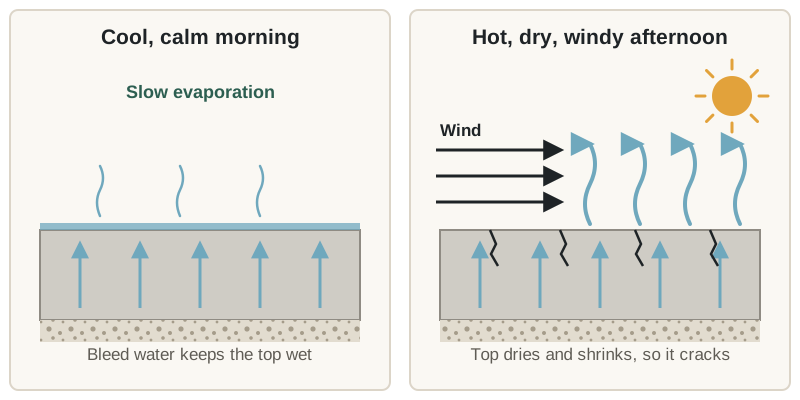
Fresh concrete has more water in it than the cement needs, and as the heavier stuff settles, some of that water rises to the top. That's bleed water, and it keeps the surface damp while the slab sets.
The trouble starts when water leaves the surface faster than bleed water can replace it. The top layer shrinks while the concrete under it doesn't, and it tears. Four things speed that up: low humidity, wind, sun and warm concrete. Reno has all four on a lot of afternoons. Humidity in the teens or lower is normal here, the afternoon wind is close to a sure thing, and the sun at 4,500 feet is no joke.
Industry guidelines start calling for precautions once the evaporation rate gets up around two tenths of a pound of water per square foot per hour. On a dry, breezy summer afternoon here, it's easy to blow right past that.
How a good crew prevents it
None of this is exotic. It just takes planning, and not cutting corners when everybody wants to go home.
- Pour early. We like to be placing concrete at first light and finishing before the wind picks up.
- Block the wind. Temporary wind screens on the exposed side make a real difference.
- Use an evaporation retarder. It's a thin film sprayed on during finishing that slows water loss off the surface. It isn't a curing compound and it doesn't change the finish.
- Keep the concrete cool in summer. Chilled water or ice in the mix, and dampening the base so it doesn't pull water out of the bottom of the slab.
- Start curing right away. Curing compound or a wet cure as soon as the finish will take it, and keeping it from drying out for days, not hours.
- Move the pour when it's bad. If it's going to blow hard from morning on, the right call is a different day.
What to ask before you hire someone
Ask how they handle wind and heat. A crew that pours around here regularly will have a quick answer: what time they start, whether they use screens and retarder, and how they cure. If the answer is "we just work fast," keep looking.
If your new slab already has them
Don't panic. Fine, shallow shrinkage cracks usually don't affect strength. Keep the slab curing (don't let it dry out in the first week), and once it's cured, seal the cracks so water stays out before winter. If they're wide, deep, or showing up along with other problems, have someone look at it. We're happy to: (775) 264-5350.